

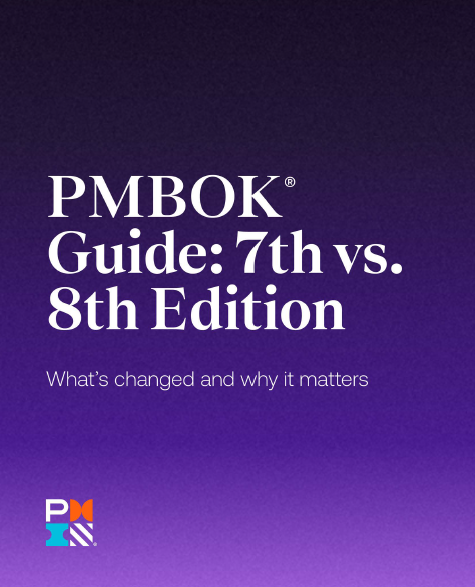
PMBOK® Guide Eighth Edition: Key Changes, New Principles, and What Project Managers Need to Know
The release of the PMBOK® Guide Eighth Edition in November 2025 marks one of the most significant updates in the evolution of project management standards. Developed by the Project Management Institute (PMI), the latest edition introduces a more practical, adaptable, and value-focused approach designed to meet the demands of modern project environments.
As organizations increasingly adopt agile, hybrid, and technology-driven delivery models, the PMBOK® Guide 8th Edition provides project professionals with updated guidance that reflects how projects are actually managed today. From simplified principles and integrated performance domains to new content on artificial intelligence (AI), sustainability, and PMO maturity, the guide equips practitioners with the tools needed to deliver successful outcomes in an increasingly complex business landscape.
A More Research-Driven PMBOK® Than Ever Before
The PMBOK® Guide Eighth Edition is PMI’s most evidence-based revision to date. The development process incorporated approximately 48,000 data points from qualitative and quantitative research, insights from 24 subject matter experts across 10 countries and five continents, and more than 12,000 comments gathered through public consultation rounds.
The result is a guide that is more accessible, streamlined, and aligned with current project management practices. Rather than focusing primarily on managing scope, schedule, and cost constraints, the new edition emphasizes value delivery, adaptability, leadership accountability, and sustainable project outcomes.
Six Core Principles of Project Management
One of the most notable changes in the PMBOK® Guide Eighth Edition is the consolidation of the 12 principles introduced in the Seventh Edition into six practical and actionable principles.
These principles are organized around three key mindset dimensions: Proactive, Ownership, and Value-Driven.
The six core principles are:
1. Adopt a Holistic View
Project managers must consider the broader organizational, stakeholder, and environmental context when making decisions and managing project activities.
2. Focus on Value
Projects should prioritize creating measurable business value rather than simply delivering outputs or meeting predefined constraints.
3. Embed Quality Into Processes and Deliverables
Quality should be integrated throughout the project lifecycle rather than treated as a separate control activity.
4. Be an Accountable Leader
Project leaders are expected to demonstrate responsibility, transparency, ethical decision-making, and ownership of project outcomes.
5. Integrate Sustainability Within All Project Areas
Sustainability considerations should be embedded into project planning, execution, governance, and decision-making processes.
6. Build an Empowered Culture
High-performing project teams thrive in environments that encourage collaboration, trust, continuous learning, and shared accountability.
Seven Performance Domains
The Eighth Edition introduces seven Performance Domains that integrate traditional project management knowledge areas with practical guidance and adaptable processes.
The seven domains are:
- Governance
- Scope (including Quality)
- Schedule
- Finance
- Stakeholders
- Resources
- Risk
Unlike traditional process-based approaches, these domains focus on achieving desired outcomes and can be applied across predictive, agile, adaptive, and hybrid project delivery methods.
From Process Groups to Focus Areas
Another major update is the replacement of traditional Process Groups with Focus Areas.
The familiar concepts of Initiating, Planning, Executing, Monitoring and Controlling, and Closing remain, but they are now presented as flexible areas of focus rather than sequential project phases.
The five Focus Areas are:
- Initiating
- Planning
- Executing
- Monitoring and Controlling
- Closing
This shift recognizes that modern projects often require iterative planning, continuous stakeholder engagement, and dynamic decision-making throughout the project lifecycle.
Artificial Intelligence Enters the PMBOK® Framework
For the first time, PMI has incorporated guidance on Artificial Intelligence (AI) within the PMBOK® Guide.
The new appendix explores:
- AI adoption strategies
- Common project management use cases
- Responsible AI implementation
- Ethical considerations
- Risks and governance requirements
As AI continues to transform project planning, scheduling, reporting, and decision support, project professionals are expected to understand both its benefits and limitations.
Greater Focus on Sustainability
Sustainability has evolved from a secondary consideration to a core project management principle.
The PMBOK® Guide Eighth Edition encourages organizations to evaluate projects through economic, environmental, and social lenses. This reflects growing stakeholder expectations and aligns project management practices with Environmental, Social, and Governance (ESG) objectives.
Project managers are now expected to consider long-term impacts and sustainable value creation alongside traditional project performance metrics.
PMO Maturity Models and Enhanced Procurement Guidance
The Eighth Edition also expands coverage in two important areas.
PMO Maturity Models
Organizations can use the newly introduced framework to assess and improve the maturity of their Project Management Office (PMO), enabling stronger governance and project delivery capabilities.
Modern Procurement Practices
An expanded procurement appendix includes:
- Make-or-buy analysis
- Contract selection strategies
- Procurement governance
- Vendor management practices
- Emerging contract management trends
These additions help organizations better navigate increasingly complex supplier ecosystems and outsourcing arrangements.
PMBOK® Guide Seventh Edition vs Eighth Edition
Several key differences distinguish the new edition from its predecessor:
| Area | PMBOK® Guide Seventh Edition | PMBOK® Guide Eighth Edition |
|---|---|---|
| Principles | 12 Principles | 6 Simplified Principles |
| Performance Domains | 8 Domains | 7 Integrated Domains |
| Process Structure | Conceptual Process Groups | Focus Areas with 40 Reintroduced Processes |
| Sustainability | Limited Coverage | Core Principle with Dedicated Guidance |
| Artificial Intelligence | Not Included | Dedicated AI Appendix |
| Procurement | Minimal Coverage | Expanded Modern Procurement Guidance |
Why the PMBOK® Guide Eighth Edition Matters
The PMBOK® Guide Eighth Edition reflects the reality that project success is no longer measured solely by delivering on time, within budget, and according to scope. Organizations increasingly expect projects to generate business value, support strategic objectives, foster innovation, and contribute to long-term sustainability.
By combining principles, performance domains, focus areas, and emerging technologies, PMI has created a framework that better supports today’s project professionals across industries and delivery approaches.
For project managers, PMO leaders, executives, and organizations pursuing project management excellence, understanding the PMBOK® Guide Eighth Edition is essential for staying aligned with current best practices and preparing for the future of project delivery.