

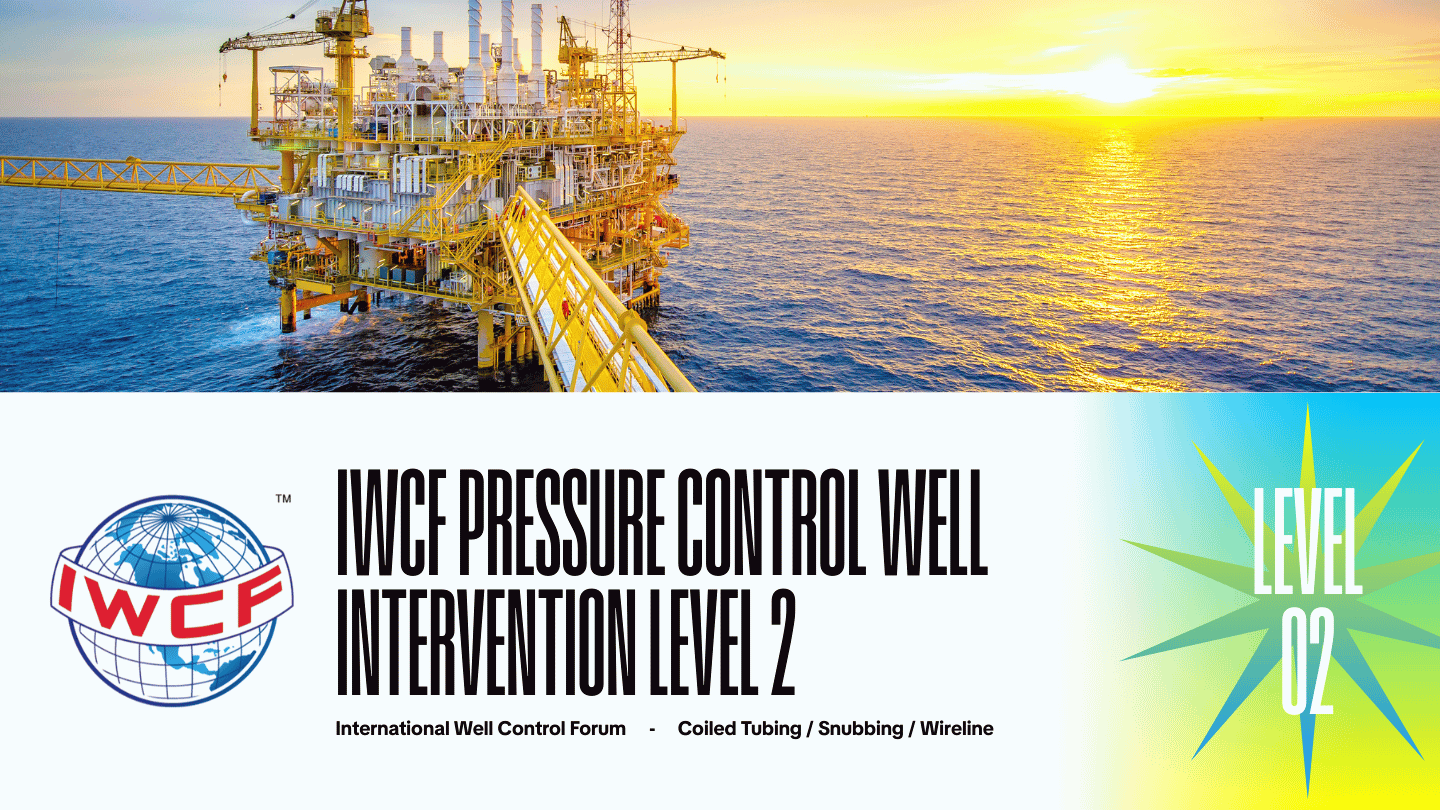
Description
Delivery
-
Duration: Typically 3–4 days (minimum 20 hours for classroom course)
-
Mode: In-person, instructor-led classroom or self-paced e-learning (online learning available, but assessment is proctored at an accredited center)
-
Schedule: Consecutive modules, ending with written assessments
-
Requirement: IWCF Candidate Registration (CR) Number
-
Certificate Validity: 5 years upon successful completion and passing all assessments
Method
-
Curriculum: Official IWCF Well Intervention Pressure Control Level 2 syllabus, aligned with industry best practices and IOGP recommendations
-
Instruction: Interactive lectures, animations, group discussions, videos, instructor demonstrations, and classroom workbook exercises
-
Practical Training: Scenario-based exercises on barrier management, influx detection, and safe well control actions tailored to coiled tubing, snubbing, and wireline
-
Assessment:
-
Written exams in both Completion Operations and Completion Equipment (compulsory)
-
At least one optional module: Coiled Tubing, Snubbing, or Wireline (minimum 70% pass mark per section)
-
Multiple choice and direct answer questions on fundamental pressure control topics
-
-
Learning Resources: Workbooks, handouts, self-study and exam-prep materials, personal feedback
Course Overview
The IWCF Level 2 Well Intervention Pressure Control course provides junior and entry-level field personnel with an introduction to well intervention operations (coiled tubing, snubbing, wireline). The course covers:
-
Basic well control and barrier concepts
-
Completion equipment and pressure control tools
-
Introduction to well control procedures, shut-in, and contingency planning
-
Early warning signs and safety protocols during intervention
-
Simple well control calculations (hydrostatic, surface pressure)
The program aims to establish a foundation in well intervention safety practices, pressure management, and hazard recognition prior to taking on Level 3 responsibilities.
Training Objectives
By the end of the course, participants will be able to:
-
Explain the purpose and types of well interventions (coiled tubing, snubbing, wireline)
-
Identify causes and early warning signs of well control problems during intervention
-
Understand basic pressure control concepts and the role of barriers in well integrity
-
Assist in routine rig-up, pressure testing, and operation of completion and well control equipment
-
Describe and follow fundamental shut-in and contingency procedures for each intervention method
-
Perform basic pressure calculations and recognize the importance of correct values for safety
-
Demonstrate awareness of critical safety practices and the importance of adherence to standard procedures
Designed For
-
Level 2 (Introductory): Assistant Operators (wireline, coiled tubing, snubbing), entry-level field techs, and other staff whose work may contribute to the detection/control of a well influx but are not yet responsible for independent well shut-in
-
Prerequisites: No previous IWCF certificate required; field role and basic operational awareness are assumed

Reviews
There are no reviews yet.